
Taking a contemporary perspective, the Whitney is looking back through their collection, reviewing how programming has evolved in modern and contemporary art. Programmed: Rules, Codes, and Choreographies in Art, 1965–2018 begins with early conceptual works from artists like Sol LeWitt, Josef Albers, and Donald Judd, who used rules and instructions to guide their creative practices. By creating and working within these parameters, these early conceptual artists of the 1960s insisted that the idea behind the work was just as important as the work itself.
Since the 1960s, this notion of the idea behind the work being a vital component, one that can be as crucial as the product itself, has permeated contemporary art practices. The Whitney traces this strain to its contemporary literal embodiment: works created by computer program, where the result and coding behind it are inseparable and both works of art.
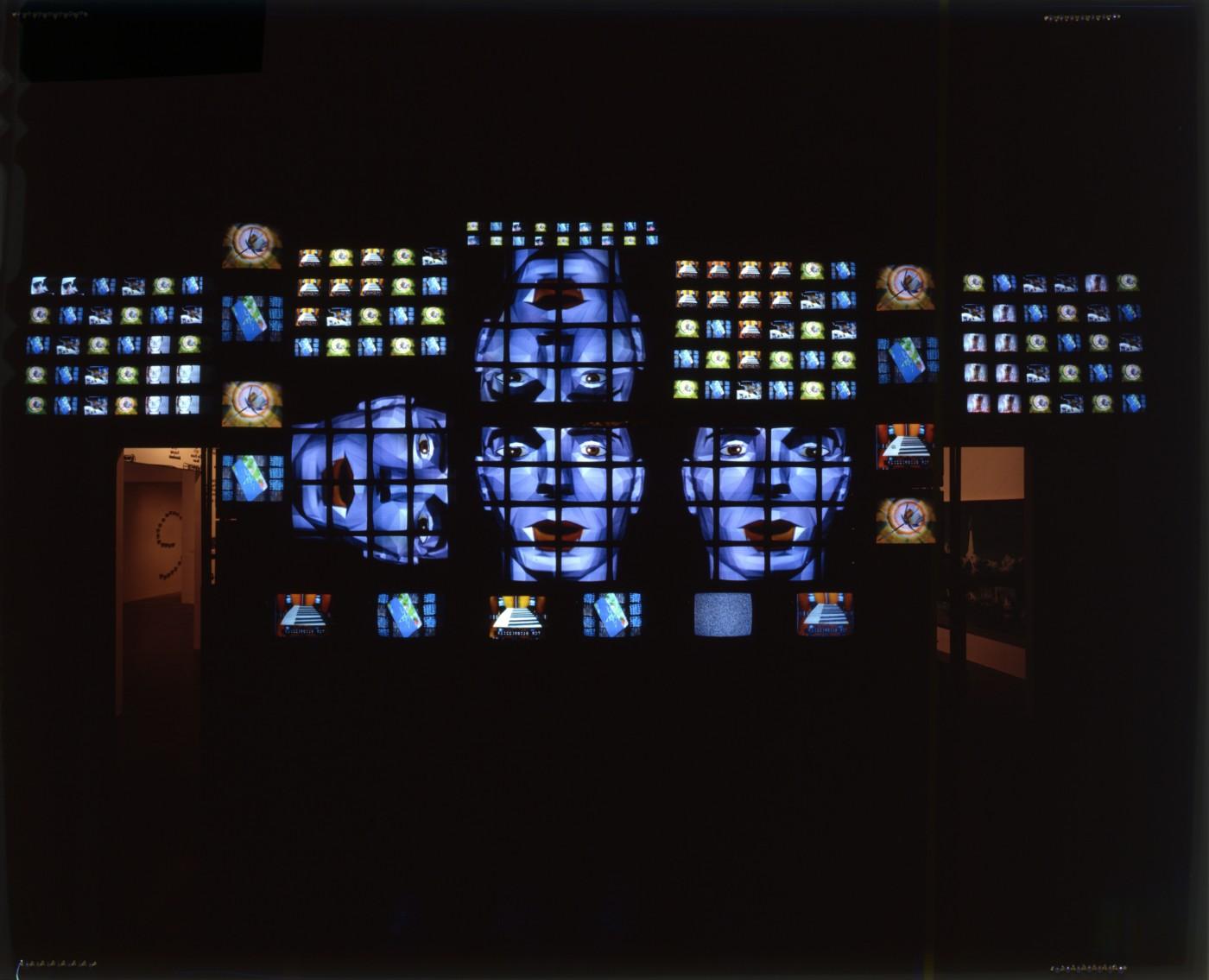
Nam June Paik (1932-2006), Fin de Siecle II, 1989. Video installation, 201 television sets with four laserdiscs. Whitney Museum of American Art, New York; gift of Laila and Thurston Twigg-Smith 93.139.