Gallery  April 27, 2026  Jane Horowitz

Why Yoko Ono's First LA Museum Show Matters

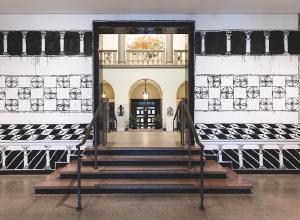
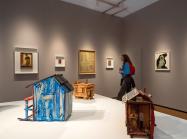
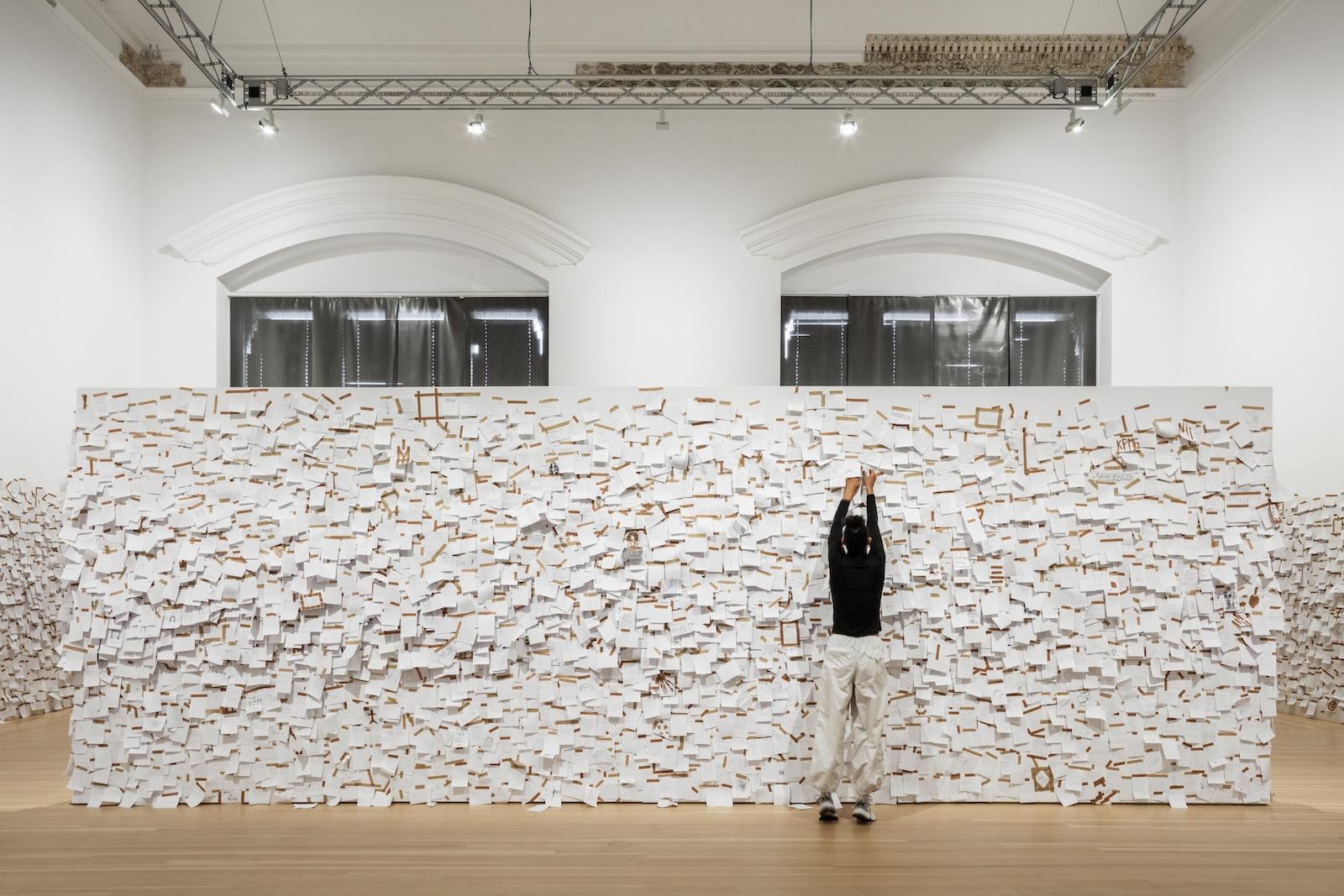
© Gropius Bau, photo: Luca Girardini. Artwork © Yoko Ono.

Installation view of My Mommy is Beautiful in Yoko Ono: Music of the Mind, Gropius Bau, Berlin, Germany, 2025.

For more than six decades, Yoko Ono has challenged the conventions of art by inviting the audience into the work itself—either by being part of the art or stepping on it. A new exhibition at The Broad museum in Los Angeles traces the evolution of her practice from the early Fluxus experiments of the 1950s through her sweeping participatory installations of the 2000s. Along the way, the show reveals how Ono's deceptively simple instructions—sometimes poetic, sometimes political—transformed the role of the spectator into that of collaborator.

Yoko Ono: Music of the Mind, the artist's first solo museum exhibition in Southern California, will serve for many as a long-overdue introduction to the 93-year-old's oeuvre. Ono was an accomplished and recognized artist well before her marriage to John Lennon thrust her into the spotlight, and she was an early practitioner of what we now call performance art. That the broader public still associates her primarily with Lennon is one of the quiet provocations the exhibition implicitly addresses.

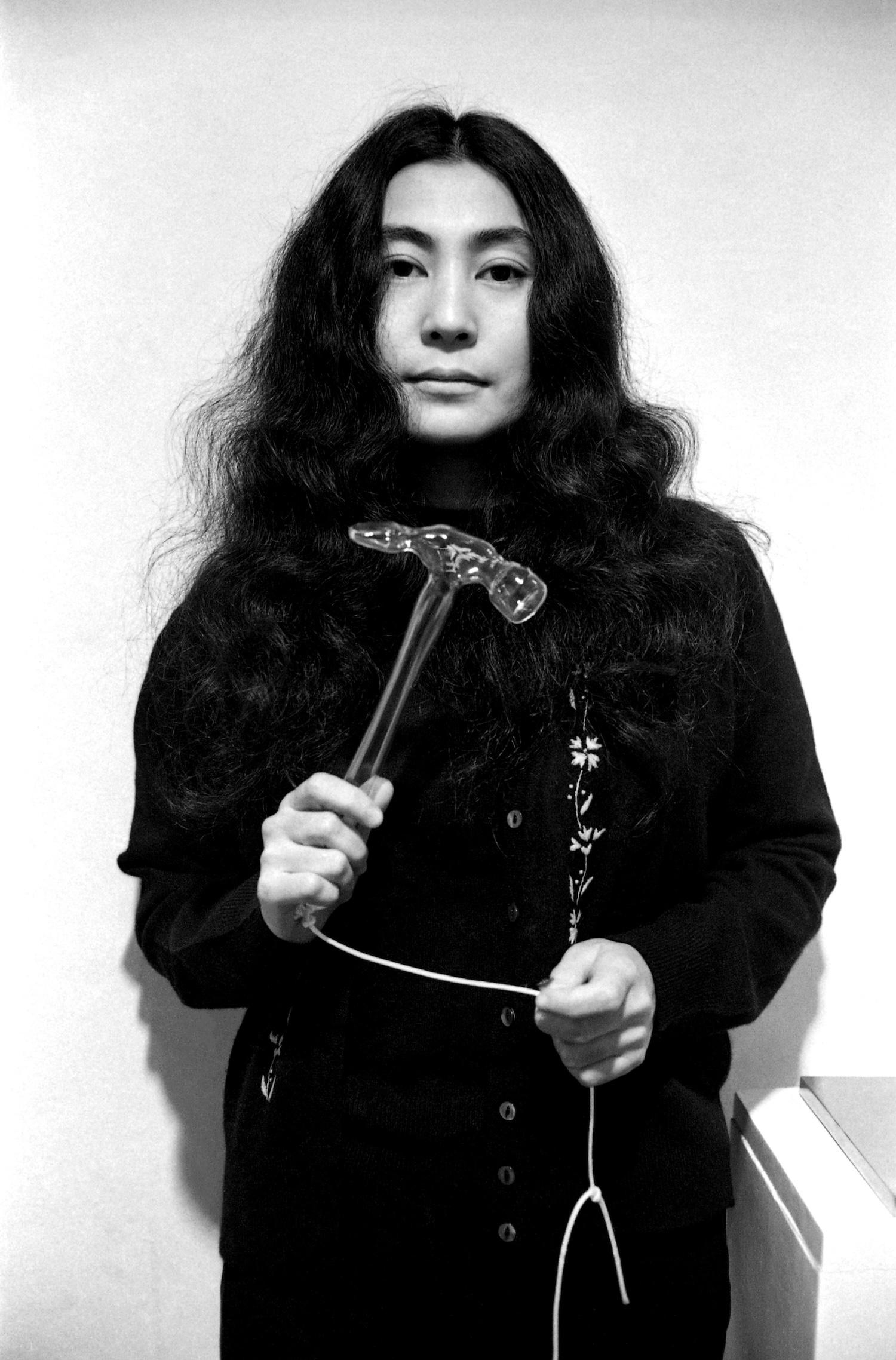
© Yoko Ono. Photo by and © Clay Perry.

Yoko Ono holding Glass Hammer, 1967, in Yoko Ono at Lisson: Half-A-Wind Show, Lisson Gallery, London, 1967. 

"For an art audience, I think there will be some surprises," Sarah Loyer, The Broad's Curator and Exhibitions Manager said in a recent interview. "And for a general audience who knows her name but may not know much about her art practice, there's a lot to discover."

The exhibition's title speaks to a philosophy Ono has held since childhood. Loyer traces it to a formative moment: when Ono was evacuated as a young girl from Tokyo during World War II and food was scarce, she and her brother would lie on the ground, look up at the sky, and imagine menus together. Art, for Ono, was always something that could be conjured from the mind alone—a survival tool as much as an aesthetic one.

That belief found its formal expression in her "instruction" works, short texts that describe actions for viewers to complete or reflect upon. The typescript drafts for her landmark 1964 book Grapefruit, which contains more than 200 instructions—such as "Listen to the sound of the Earth turning," "Fly," and "Draw a map to get lost"—will be at The Broad. These pieces exist somewhere between score and poem, and several will be activated for audience participation, including Painting to Hammer a Nail (1961/1966). The exhibition begins with one of Ono's earliest conceptual works, FILM NO. 1 ("MATCH") / Fluxfilm No. 14 (1966), in which the instruction reads simply: light a match and watch until it goes out.
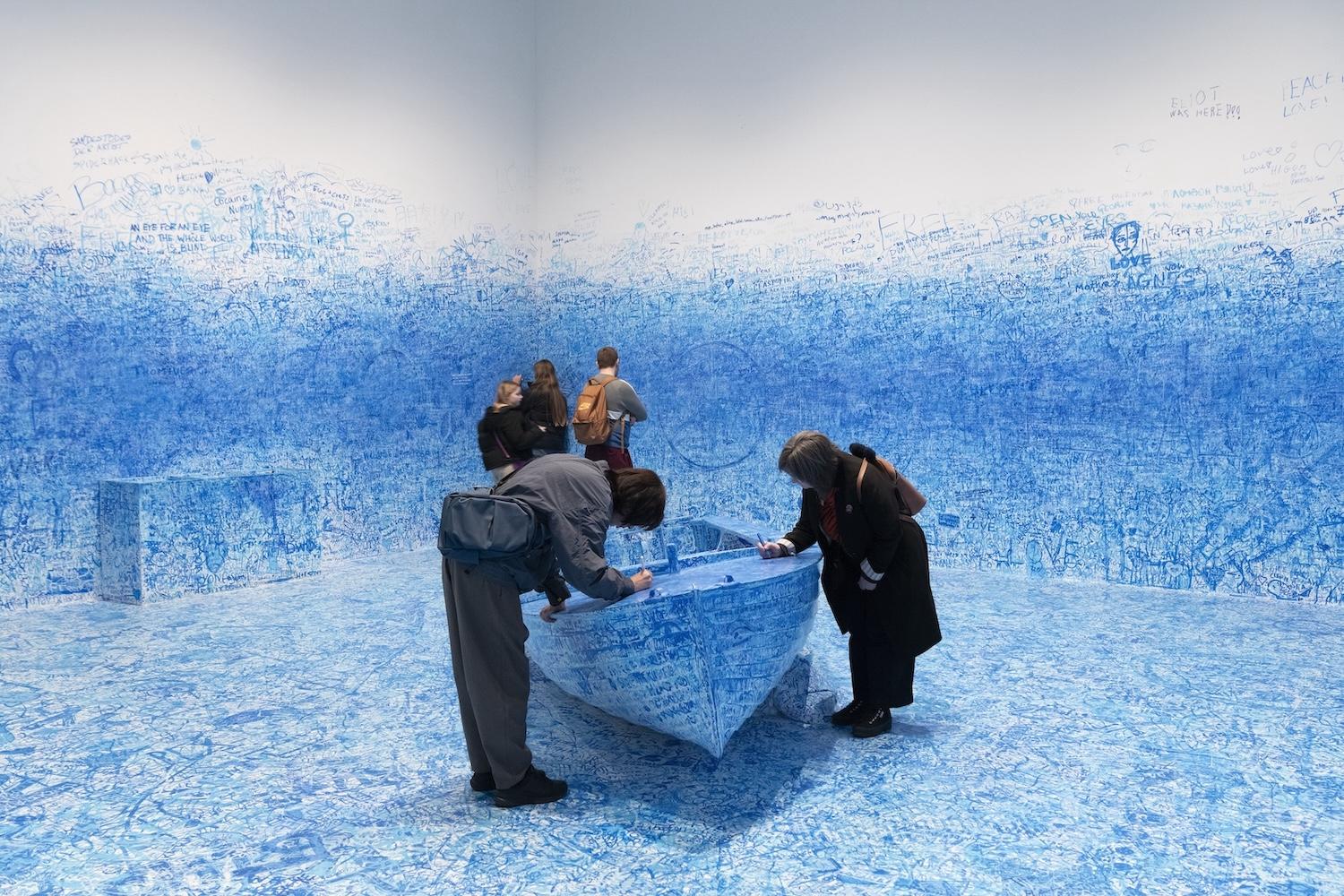
© Yoko Ono. Photo © Oliver Cowling, courtesy of Tate.

Visitors explore Yoko Ono’s Add Colour (Refugee Boat) (1960/2016) installed in Yoko Ono: Music of the Mind, Tate Modern, London, 2024. 

Participatory works are scattered as punctuations throughout the show, each one handing authorship to the visitor. In Add Colour (Refugee Boat) (1960/2016), guests armed with blue markers are invited to write messages of solidarity on a boat and its surrounding walls, creating a sea of blue for the vessel to navigate. The work carries an implicit message about immigration and displacement, but Loyer is careful to note that Ono trusts the audience to complete the thought. "It's quite disarming," Loyer observes, "by inviting that kind of participation. It sort of breaks the third wall."

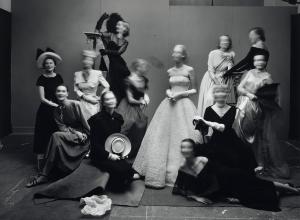
© Yoko Ono

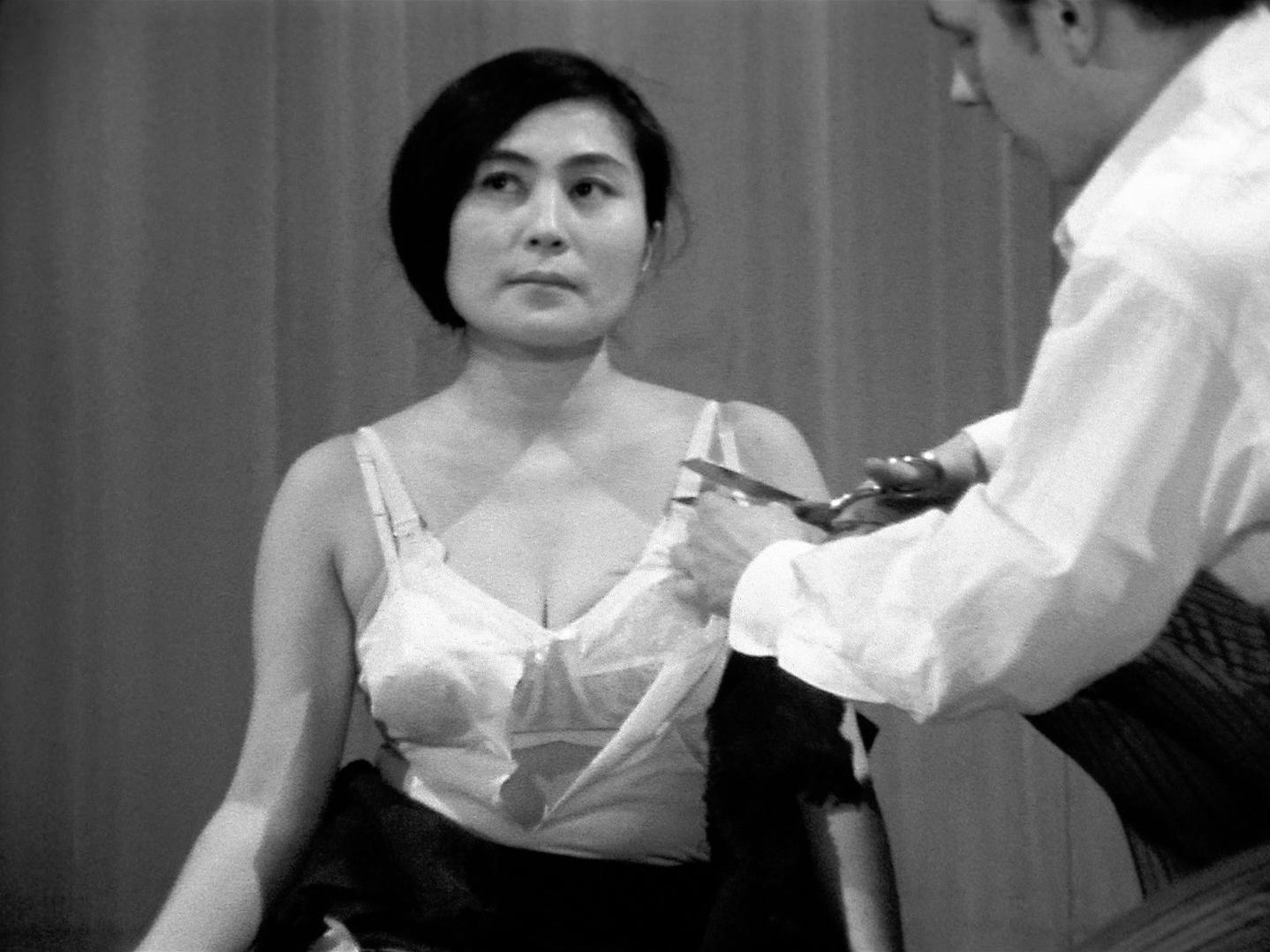
Cut Piece, 1964, performed in New Works of Yoko Ono, Carnegie Recital Hall, New York, filmed by David and Albert Maysles, film, 16mm, black and white, and sound (stereo), 8min, 27sec.

Among Ono's most celebrated, and unsettling, participatory works, Cut Piece (1964) will be represented through film footage. In the original performances, first at Yamaichi Hall in Kyoto and the following year at Carnegie Hall, audience members were invited to cut away pieces of Ono's clothing, without Ono reacting. "The audience makes the work as much as the performer, as much as Ono herself," says Loyer. It is a work that continues to provoke, decades on.

Ono’s artistic activism takes other forms as well. Materials from Acorn Event (1968) and Bed Peace (1969), both created with Lennon, document the couple's efforts to leverage fame as a vehicle for anti-war protest—from sending acorns to world leaders as living symbols of peace, to their famous Amsterdam bed-in, which drew reporters from around the world. A photograph of the billboard from the War Is Over! If You Want It campaign, which appeared on Sunset Boulevard in 1969, connects the work directly to Los Angeles.

© Yoko Ono. Photo © Oliver Cowling, courtesy of Tate.

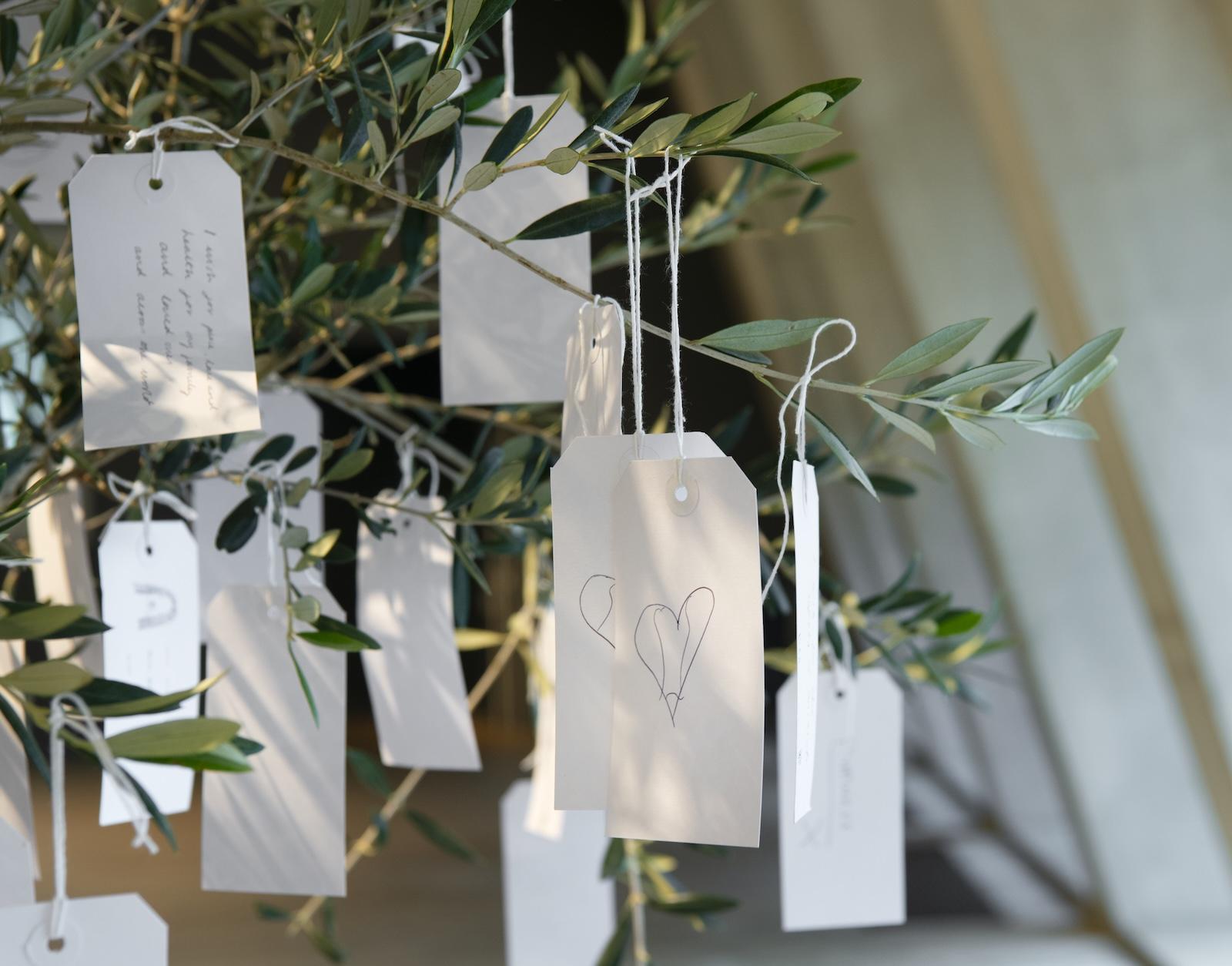
Yoko Ono, Wish Trees for London, 2024, installed in Yoko Ono: Music of the Mind at Tate Modern, London, 2024.

Before visitors even enter the museum, they will encounter Wish Trees for Los Angeles, realized at The Broad's olive trees on East West Bank Plaza, where they are invited to tie their own wishes to the branches. It is a fitting threshold: Ono's entire practice asks us to bring something of ourselves to the work. At The Broad this spring, that invitation is extended once again.

34.054527860733, -118.2506482

Start Date:
May 23, 2026
End Date:
October 11, 2026
Venue:
The Broad
About the Author

Jane Horowitz

Jane Horowitz is a Los Angeles-based arts journalist whose writing has appeared in the Los Angeles Times, FAD magazine, and Art NowLA, among others. Her reporting spans the contemporary art world, with interviews featuring artists such as Amy Sherald and Elmgreen & Dragset.

Subscribe to our free e-letter!

Webform
Art and Object Marketplace - A Curated Art Marketplace