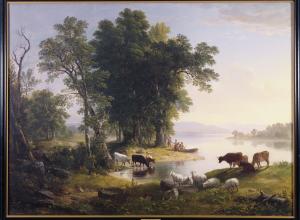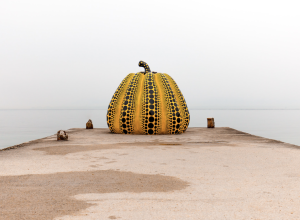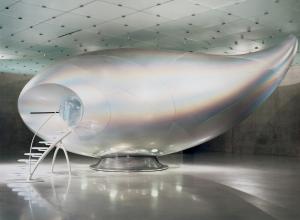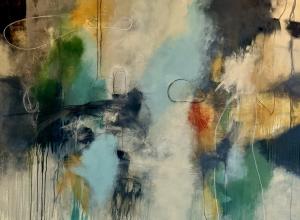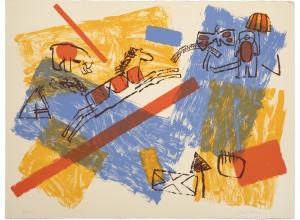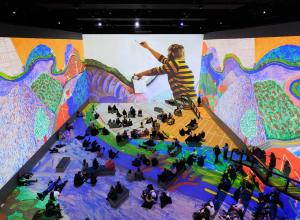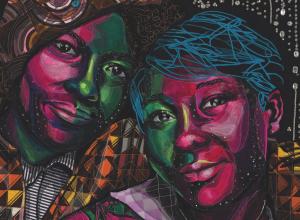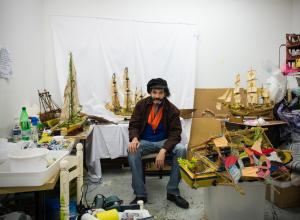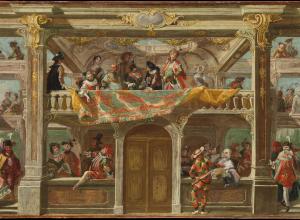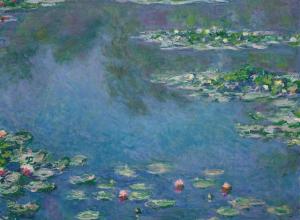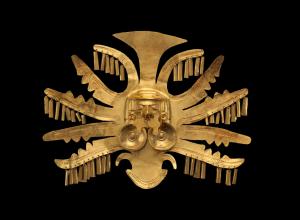

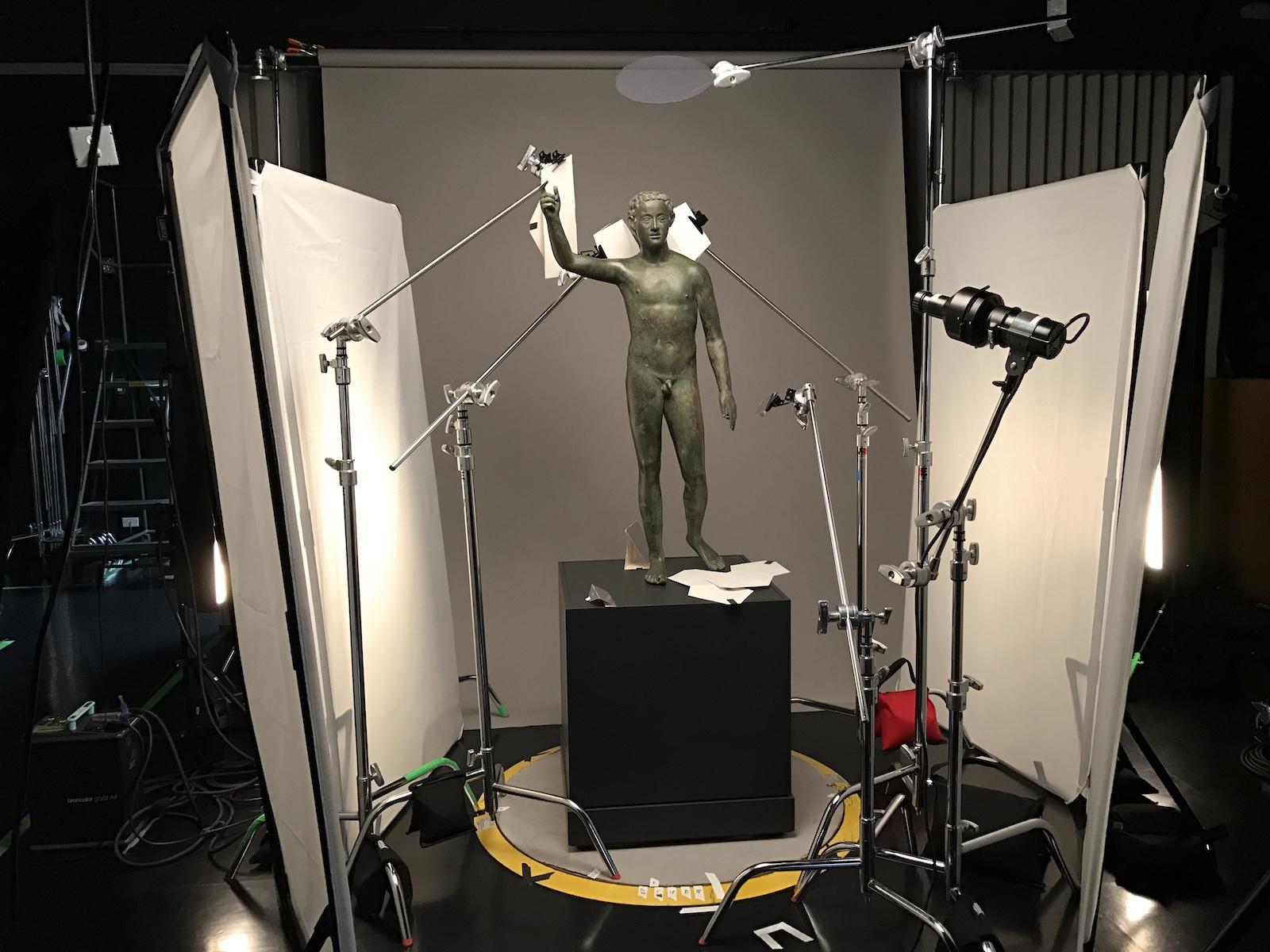
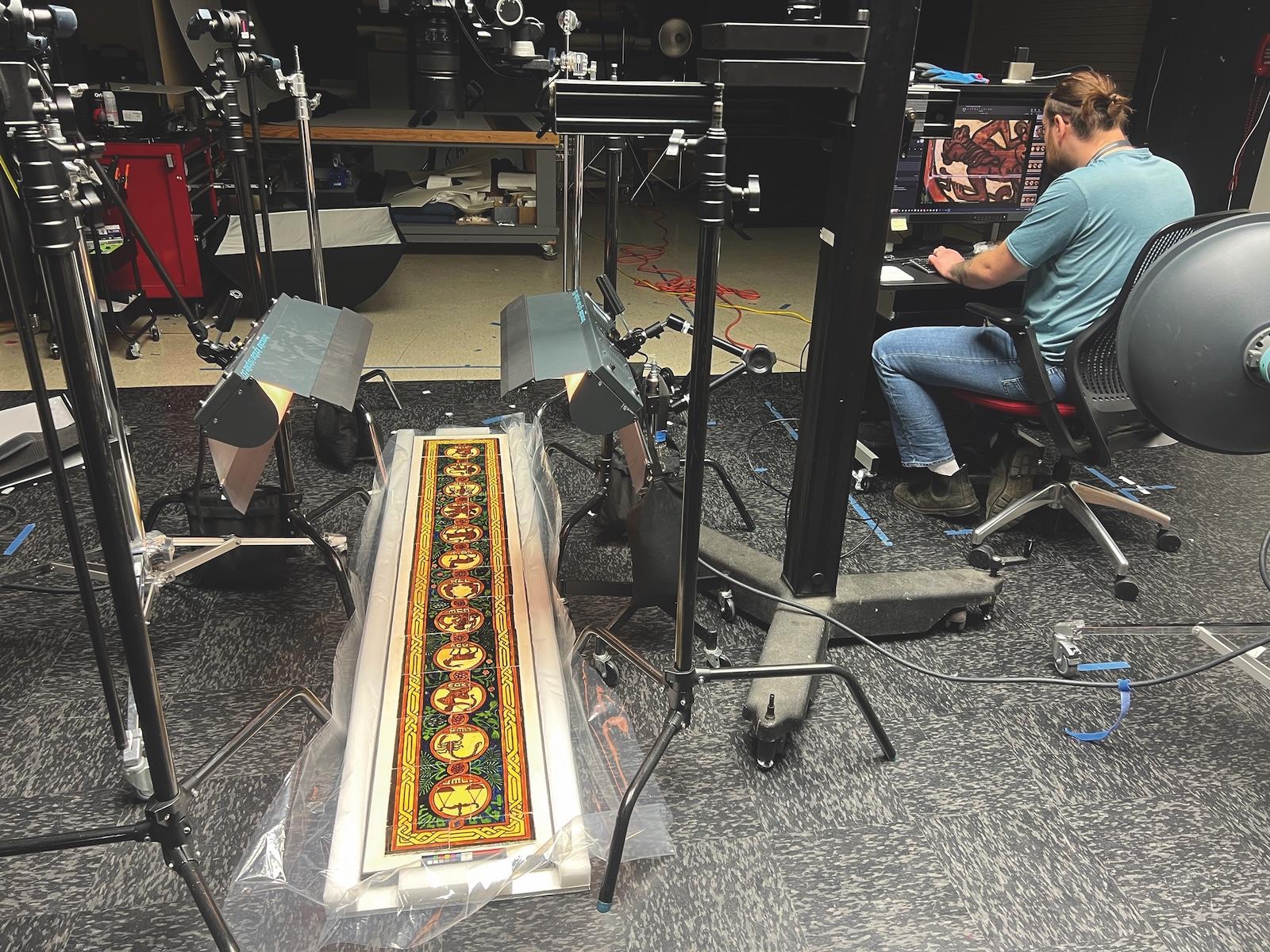
Different types of artwork require different lighting strategies. Paintings demand soft and even lighting in order to preserve color accuracy and reveal intricate brushwork. Sculptures, on the other hand, benefit from directional lighting that enhances texture and depth. Mixed-media pieces, with their combination of materials, often require customized lighting setups to bring out the nuances of each element. Once again, balance is key. For example, if lighting across a sculpture produces too much shadow, details can be obscured, but with too much light, the final product might appear flat or dimensionless. To control shadows, photographers often work with diffusers—a tool used to soften and spread light to create a more even, flattering illumination on their subjects. Cracchiola also harnesses multiple light sources when working with three-dimensional objects. “I like to use different light shapers as accent sources to bring light from angles at 10 o’clock and 2 o’clock in the 3-D space,” she says.
Post-processing plays a crucial role in fine art photography, as it helps to further refine and perfect images. In many cases, photographers will finish color-correcting at this stage or will sharpen an image to enhance textures or fine details that are difficult to see in a flat image but are legible to the human eye, which is often more accurate than a camera’s lens. Finally, retouching might be necessary to remove distracting elements, such as unexpected glare or dust spots. With any corrective action, the goal is the same: to preserve the integrity of the artwork while presenting it in the best possible light, literally and metaphorically.
What do photographers want in an image? Accuracy, for certain—but they also want to create a photograph that provides visual impact. “Currently, I work in an auction house, where accuracy remains a top priority,” says Martens. “But there is also a commercial aspect to consider. The goal is not only to document the artwork faithfully but also to present it in a way that is visually compelling to potential buyers. This balance requires a nuanced approach—maintaining fidelity while ensuring the images are engaging and market-ready.”
To create the most appealing image, photographers often work with other experts—like curators, researchers, or historians—to confer upon the “story” to be shared with the viewer. “Every object has a ‘main view’ which essentially encompasses the moment of action or power of the narrative,” says Cracchiola. “When an object arrives on set, I invite the head curator into my studio to discuss the position of each view [of the object].” Together, the photographer and curator determine the image’s composition: everything from the angling of the object to the height of the camera, for the purpose of “revealing the story behind the object and the mood of the scene,” explains Cracchiola.
When photographing Greco-Roman sculptures, for example, she frequently positions her camera lower than the figure’s eye level, giving the piece—regardless of its actual size—a larger-than-life appearance that accurately reveals its grandeur. This and similar approaches inform sculpture photography, a genre within the art world in which photographers’ images of three-dimensional objects come to be seen as artworks in their own right. The way a photographer chooses to represent a sculpture, including angle, lighting, and composition, can elevate the image beyond mere documentation.
A three-dimensional object’s presence could easily be blurred without the right background. “Generally, it is preferred to have a contrasting, neutral background of white, gray, or black, depending on the color of the object,” notes Chris Ciccone, photographer and manager of digital imaging at the North Carolina Museum of Art in Raleigh, NC. Such a background prevents distractions and allows the viewer’s attention to dwell on the details of the artwork rather than on extraneous elements.
The question of copyright is an important one in fine art photography, and “ownership” of the photographs—who controls the final image and access to it?—depends on several factors. If a photographer is commissioned by a museum, gallery, or artist, the commissioning entity may own the rights to the images. However, if photographers capture artwork on their own behalf, they typically retain the copyright, unless an agreement states otherwise. Yet even in cases in which the photographer owns the image, the artist or artist’s estate may still hold rights over the artwork, which can limit how the photograph is used. It can even determine how the work is photographed in the first place. Ciccone notes, “We are guided by any restrictions that may be in place in an artist agreement. Some artists or representatives, for example, prohibit any cropping of an artwork or placing any text over an artwork.”
Cropping or otherwise altering the appearance of a work of art via photography, of course, raises the question, at what point does a modification change the intention or meaning of an artwork? Such changes can further muddy the legal or ethical implications of photography. Has the photographer produced a new work that happens to feature another work of art? In an era of image proliferation amid an explosion of new media, there is plenty of material here for debate and, in some cases, litigation.
Professional art photography is a delicate balance of technical skill and artistic vision—much like the creation of the art object being photographed. “It requires the photographer to see beyond the surface and reveal something true about form, meaning, and presence,” Cracchiola says, “capturing not just what the subject looks like, but what it feels like to stand before it.”
*This article originally appeared in Art & Object Magazine's Summer 2025 issue.