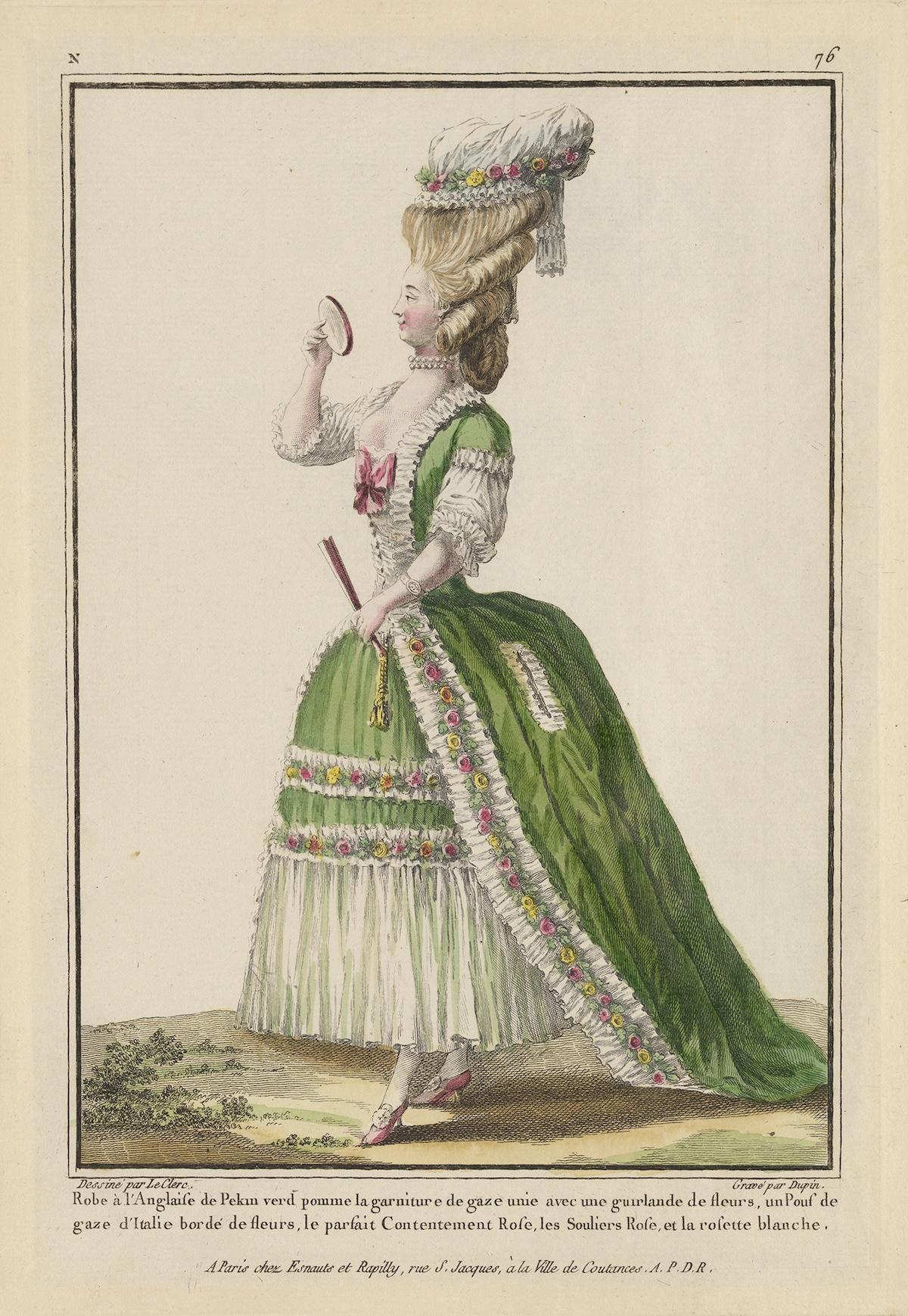


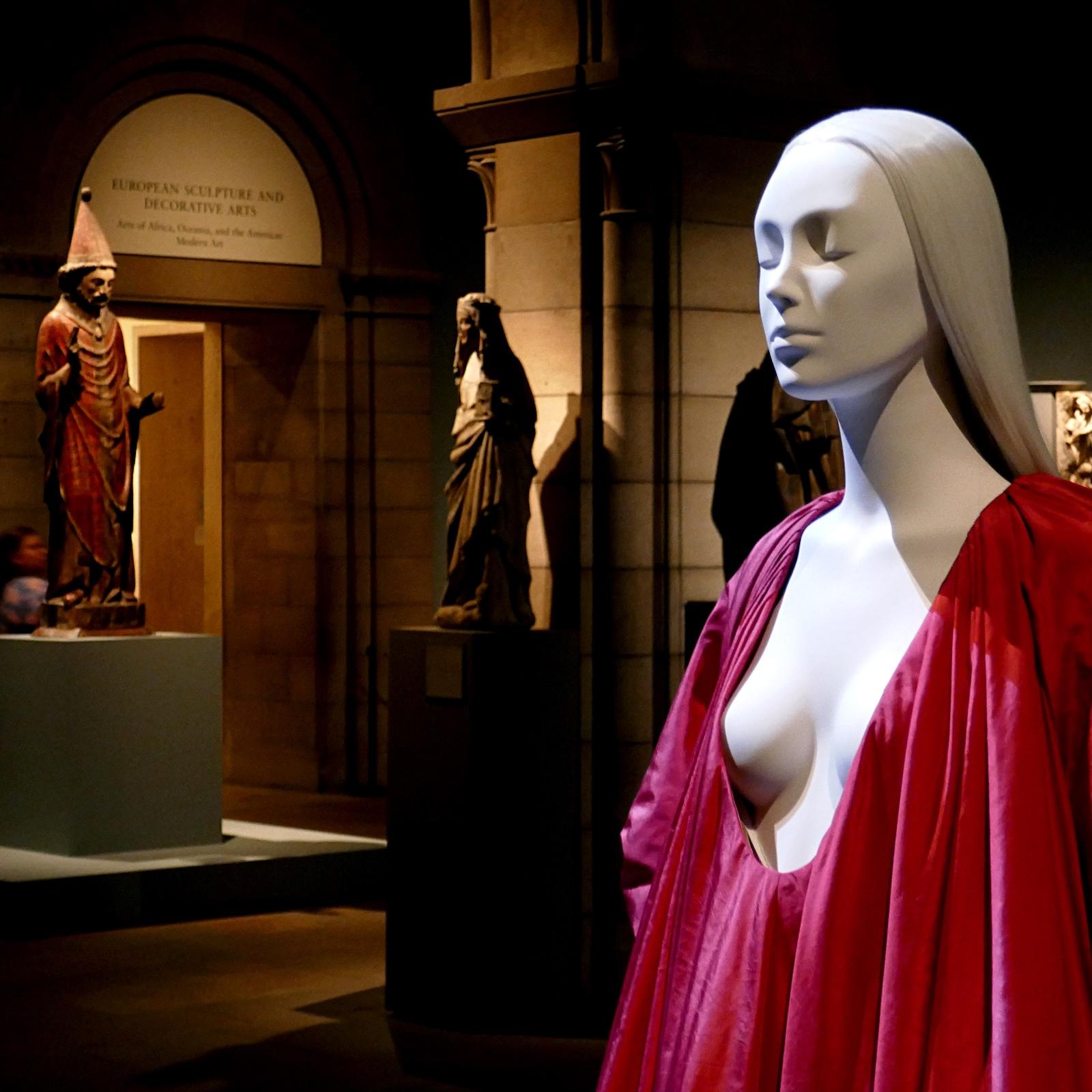
This year’s event coincides with the opening of the Met’s Condé M. Nast Galleries, nearly 12,000 square feet of space adjacent to the Great Hall, whose inaugural exhibition is titled Costume Art. The show pairs pieces from the Costume Institute and objects from the museum’s broader collection around the theme of the dressed body across cultures. A Greek vessel from 460 BCE is placed alongside a 1920s gown by Fortuny. Albrecht Dürer’s The Man of Sorrows hangs near Vivienne Westwood’s “Martyr to Love” jacket. A Georges Seurat study for A Sunday on La Grande Jatte is set in dialogue with an 1883 walking dress.
Fashion is framed as a form of creative expression and an essential part of shared human history. Brooklyn-based firm Peterson Rich Office designed the galleries with limestone thresholds to echo the Great Hall’s arches in a way that draws further parallels to the works within each space.
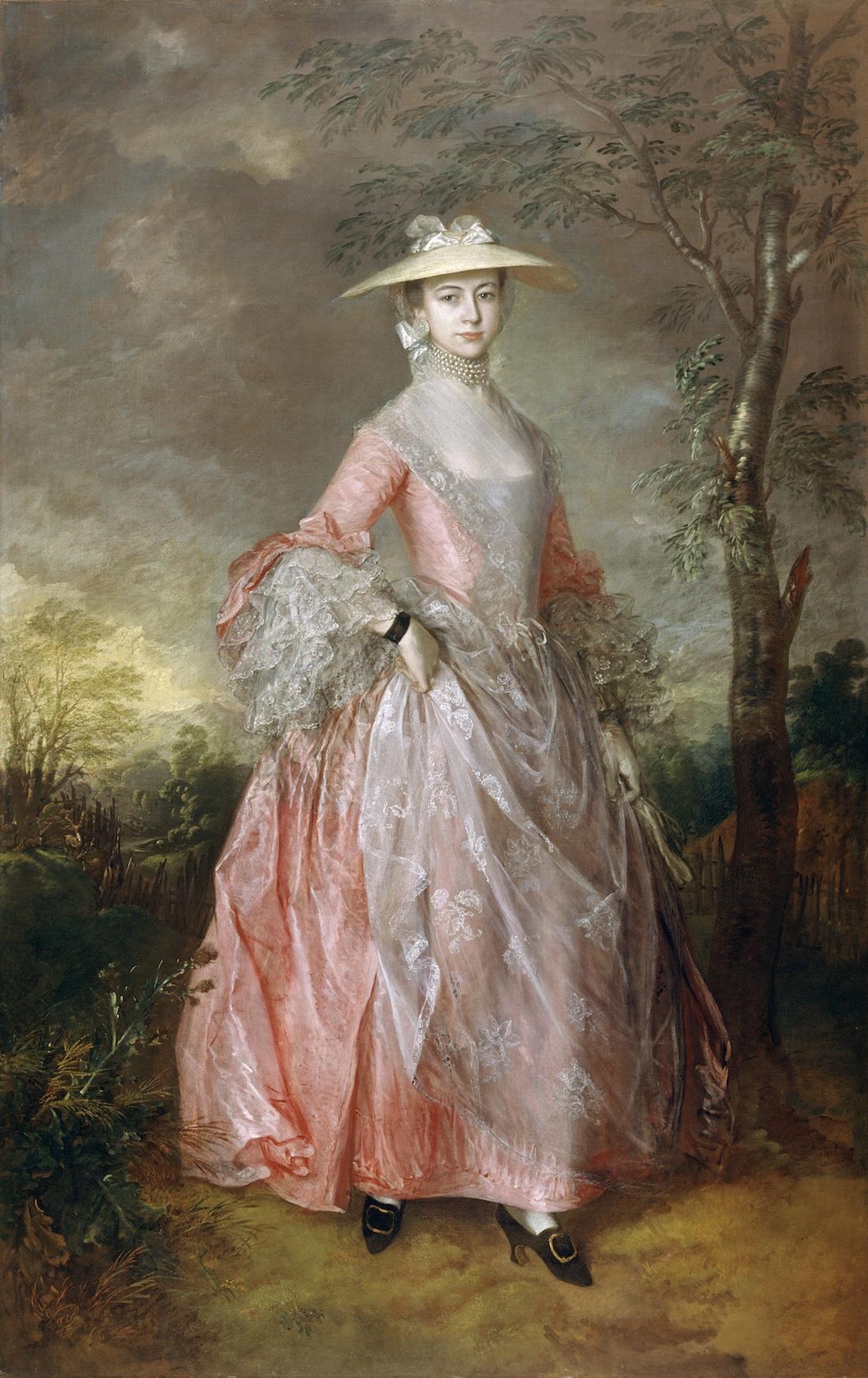
The Frick Collection’s soon-to-close Gainsborough: The Fashion of Portraiture exhibition similarly examines clothing as a form of personal and social expression in Georgian England. Both men’s and women’s dress operated as an indicator of class and fortune. While the Royal Academy pushed painters towards classical costumes to dignify subjects and insulate them from the passage of time, Thomas Gainsborough insisted that contemporary fashion was central to a true likeness. He worked beside his sister’s millinery shop in Bath after moving to the city in 1759 and would have been familiar with the latest styles.