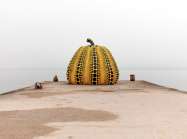
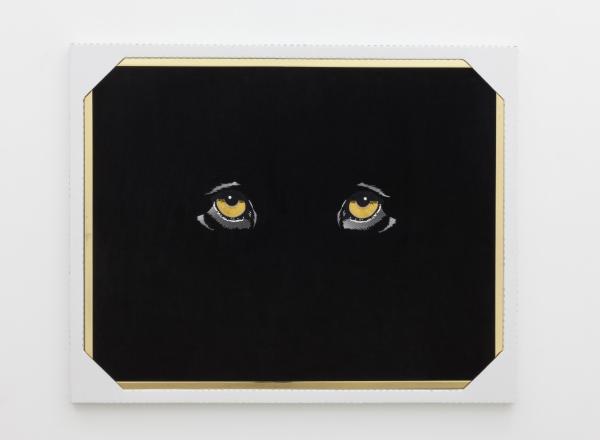
Currently at Seattle’s Frye Art Museum, Juventino Aranda’s Pocket Full of Posies explores how everyday objects become symbols of identity and social strata. Aranda grew up in Walla Walla, Washington, the child of Mexican immigrant workers, and was the first in his family to get a University degree. His work reflects the mixed cultural heritage of immigrants in the US. As an activist and artist, Aranda uses his installations to draw attention to socioeconomic, political and cultural issues.
Art News
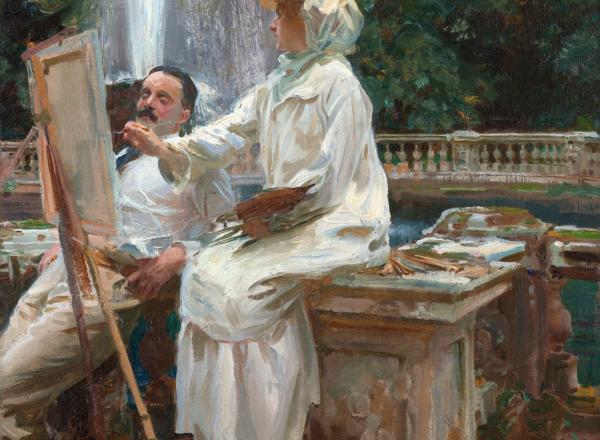
The Art Institute of Chicago has brought together a stunning collection of works by one of America’s greatest portraitists. The recently opened John Singer Sargent and Chicago’s Gilded Age includes over 100 objects, both borrowed and from the museum’s collection, highlighting the connections the painter had with the city of Chicago. Though Sargent is best known for his portraits, his artistic practice was wide-ranging, and this exhibition covers all of his output, including the en plein air landscapes of his late career, sketches, and watercolors.
Photographer Catherine Opie traces her personal and artistic development in San Francisco. She describes how she captured the invented “personas” of the city’s queer community during the AIDS crisis in the early 1990s.
Explore Tim Marlow's Must-See Museum Shows in July 2018.
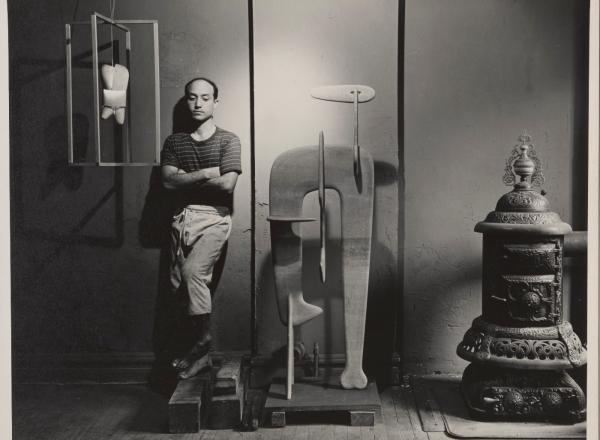
Pinpoint a figure staring directly out at you in an early Renaissance painting and chances are it’s a surreptitious self-portrait, slipped into a crowded scene. It took time for artists to feel comfortable devoting entire canvases to their own likenesses, and longer for masters such as Rembrandt van Rijn to return to self-portraiture over and over. But with the invention of photography in 1839, things changed. Artists could quickly and cheaply craft self-images that were divorced from their work, playing with their personas without wielding paintbrushes or chisels.
Lubaina Himid’s paintings and installations explore ideas around black British representation and identity.
In this film we visit Turner Prize winning artist Lubaina Himid in her studio in Preston. She shows us around her recent exhibition at the Harris Museum and Art Gallery and tells us how her mother’s job in costume design was an early influence on her own.
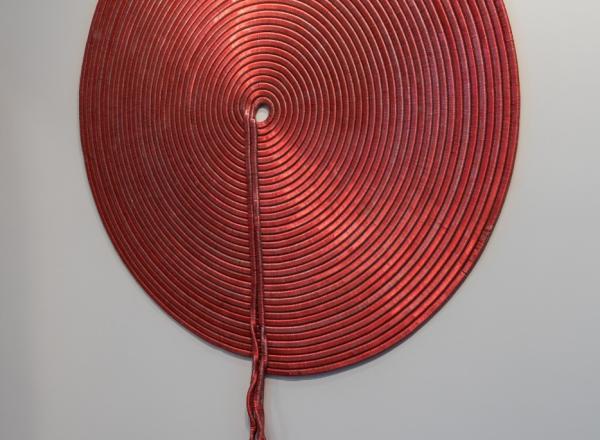
Now showing at the National Museum of Women in the Arts (NMWA) in Washington, D.C. is the latest installment of the museum’s ongoing Women to Watch Series. Heavy Metal includes over 50 works from 20 contemporary artists, covering the huge breadth of techniques, materials, and artworks that encompass contemporary metal work. Seeking to defy the conventional association with metal work as a male-dominated art form, the exhibition shows all that woman are accomplishing in this diverse range of materials.
Trevor Paglen blurs the lines between art, science, and investigative journalism to construct unfamiliar and at times unsettling ways to see and interpret the world around us. Inspired by the landscape tradition, he captures the same horizon seen by American photographers Timothy O’Sullivan in the nineteenth century and Ansel Adams in the twentieth.
Dr. Christopher D.M. Atkins, Associate Curator of European Painting and Sculpture before 1900, Philadelphia Museum of Art, and Dr. Beth Harris discuss Rogier van der Weyden's The Crucifixion, with the Virgin and Saint John the Evangelist Mourning (c. 1460, oil on panel, left panel 180.3 × 92.2 cm, right panel 180.3 × 92.5 cm, Philadelphia Museum of Art).
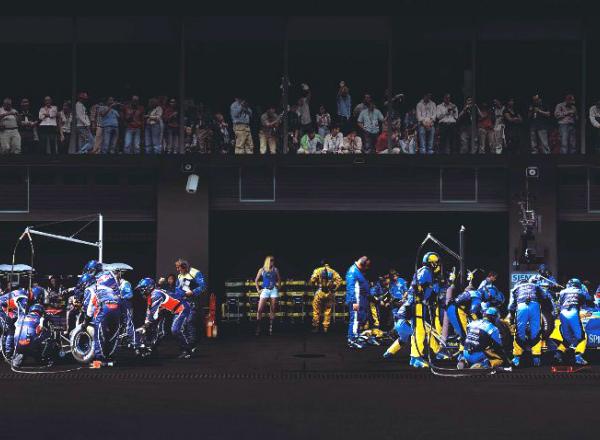
At an exhibition opening this week, the Broad Museum of Art celebrates some of its latest acquisitions. Having only opened in 2015, the Broad has a collection of more than 2,000 contemporary works, including some of the most prominent artists working today. A Journey That Wasn't groups together 50 works representing 20 artists in the permanent collection, several of which are being displayed in the museum for the first time.