Gallery  November 24, 2025  Cynthia Close

Native American Art History and Practices at The Met

Courtesy of the Met

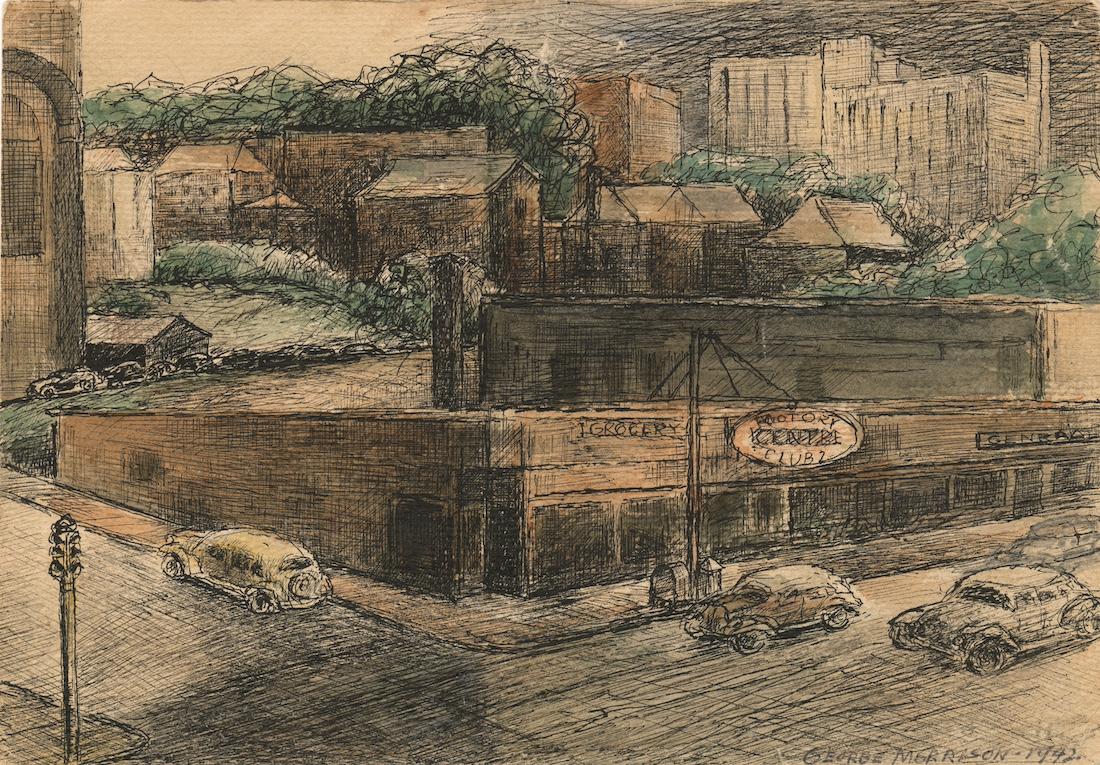
George Morrison, Native American, Grand Portage Chippewa, 1919–2000, Duluth Corner, 1942, Pen and ink on paper, 6 × 8 5/8 in. (15.2 × 21.9 cm)

In this search for my own identity, I seek the power of the rock, the magic of the water, the religion of the tree, the color of the wind and the enigma of the horizon.”–George Morrison

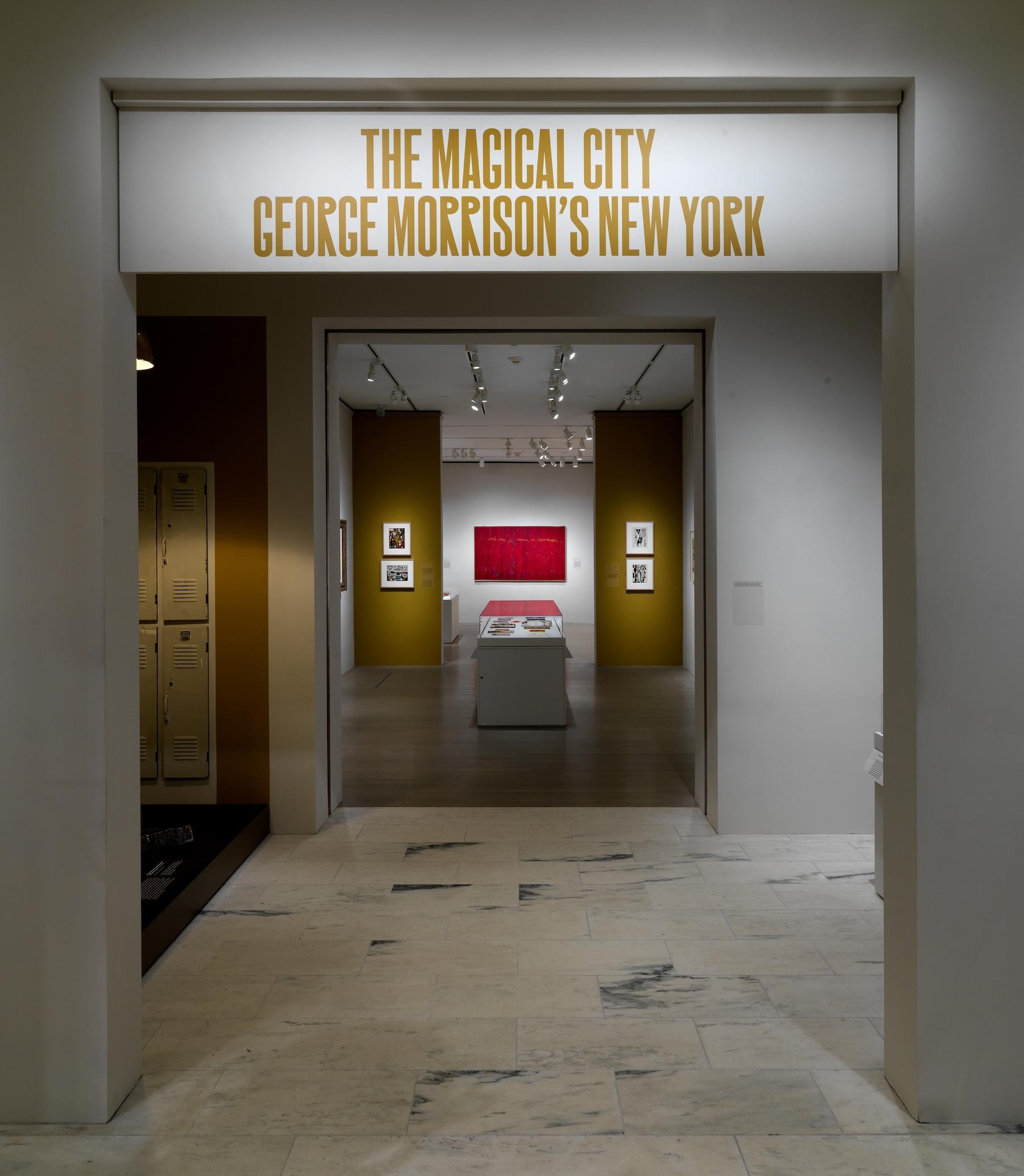
The history of American art is a story that is still being told, and Native American art practices, artists, and makers are playing a significant role in the revision of that history. The Magical City: George Morrison’s New York, a major exhibition at The Metropolitan Museum of Art in New York City from July 17, 2025 through May 31, 2026, adds an important chapter. This exhibition is part of a growing trend by institutions to present indigenous artists within a canonical art historical context rather than sidelined in dioramas of extinct cultures in ethnographic museums.

Courtesy of the Met

Born in 1919, one of 12 children in Chippewa City, a remote village on the shore of Lake Superior in northern Minnesota, George Morrison (1919-2000) (Wah-wah-ta-ga-nah-gah-boo and Gwe-ki-ge-nah-gah-boo, Grand Portage Band of Lake Superior Chippewa) overcame many obstacles—poverty, childhood illness, social isolation, and racial and cultural barriers to become a pivotal player in the burgeoning Abstract Expressionist movement in postwar 1940s and 50s New York. 

Although the family was mired in poverty, Morrison’s father had a foot in the white man’s world using his fluency in the Ojibwe language to interpret court proceedings in the early 20th century when his people were embroiled in an American judiciary system that was stacked against them. As a child, Morrison suffered from a condition that required him to be in a full body cast for months. While immobilized, he discovered his propensity for drawing. His disability led to a lifelong limp, something he shared with Mexican artist Frida Kahlo (1907-1954), another iconic figure in 20th century art.
Courtesy of the Met

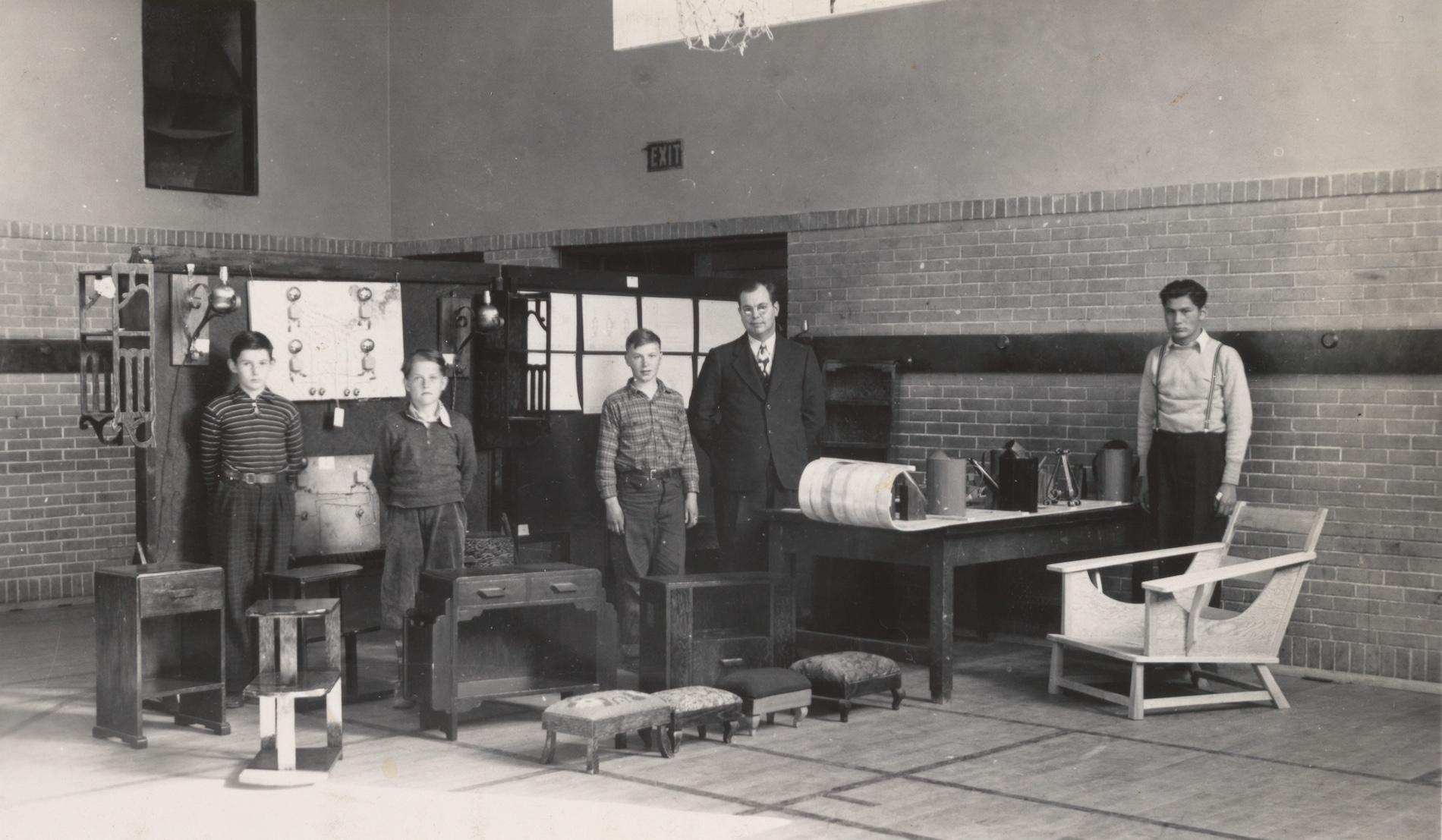
Morrison (right) in an industrial arts class at Grand Marais High School, Minnesota ca. 1937

Morrison defied expectations, graduating from Grand Marais High School in Minnesota in 1938. A 1937 photo included in the exhibition shows a tall, serious young man standing separate from his instructor and his peers in an industrial arts class. He went on to the Minneapolis School of Art, now known as the Minneapolis College of Art and Design, graduating in 1943. That same year, he won a traveling fine arts scholarship to the Art Students League in NYC where he practiced traditional skills of drawing by observation.

Between 1943 and 1970, Morrison lived and worked in New York, regularly exhibiting in group shows and solo exhibitions. The impact of the city on the emerging artist was profound. He called New York “The Magical City.” His contribution to the New York School of abstract expressionists was equal to his peers, but he was segregated by pundits who wrote about his work in the context of his Native roots, rather than as an innovator within Abstract Expressionism. The impact of this movement turned the center of the art world from Paris to New York, and Morrison’s place in that shift is revealed in this exhibition. 

Courtesy of the Met

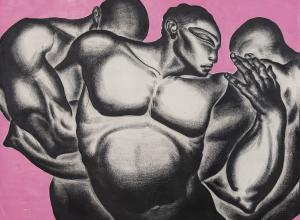
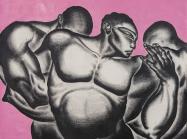
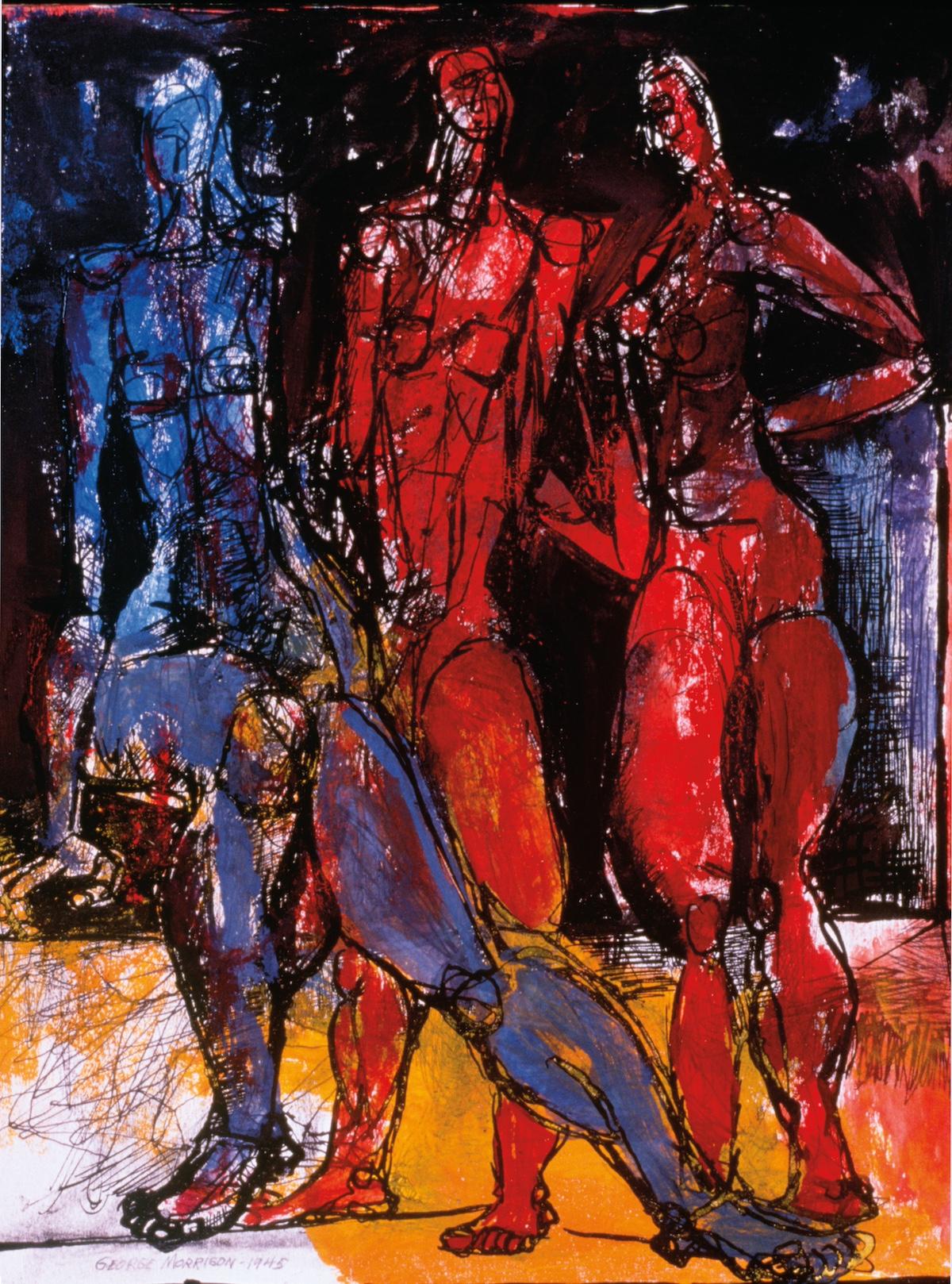
George Morrison, Native American, Grand Portage Chippewa, 1919–2000, Three Figures, 1945 Gouache, ink, and pencil on paper, Sheet: 11 3/8 × 8 1/2 in. (28.9 × 21.6 cm)Image: 10 1/4 in. × 8 in. (26 × 20.3 cm)Framed: 17 7/8, Frame Dimensions: 17 7/8 × 14 3/4 in. (45.4 × 37.5 cm)

From 1947 to 1956, Morrison participated in The Whitney Museum of American Art’s annual (now biannual) exhibition. New York critics at that time described Morrison’s work as “introspective” and “brooding.” The Antagonist, a 1956 oil on canvas, is an important example of Morrison’s aesthetic strengths—notably his sense of composition and his application of complementary colors. The push-pull tension in this work demonstrates his penchant for titles with literary and etymological resonance. This painting is now in the permanent collection at The Whitney. 

Morrison formed a particularly close bond with Franz Kline (1910-1962), another high profile member of the New York abstractionists art scene. Morrison paid homage to that relationship in the vivid, monochromatic The Red Painting (Franz Kline Painting), a 1958 oil on canvas included in this exhibition. A suspension bridge and other urban structures are reduced to an abstract language of sweeping forms, lines, and a limited palette in the painting Structural Landscape (Highway). It exemplifies Morrison’s growing interest in horizontal space. Swaths of yellow/green, gray, and black overlay a rich underpainting of deep reds. It was included in the New York exhibition at the Grand Central Art Galleries in 1952, solidifying Morrison’s reputation as a “New York School” artist.

Courtesy of the Met

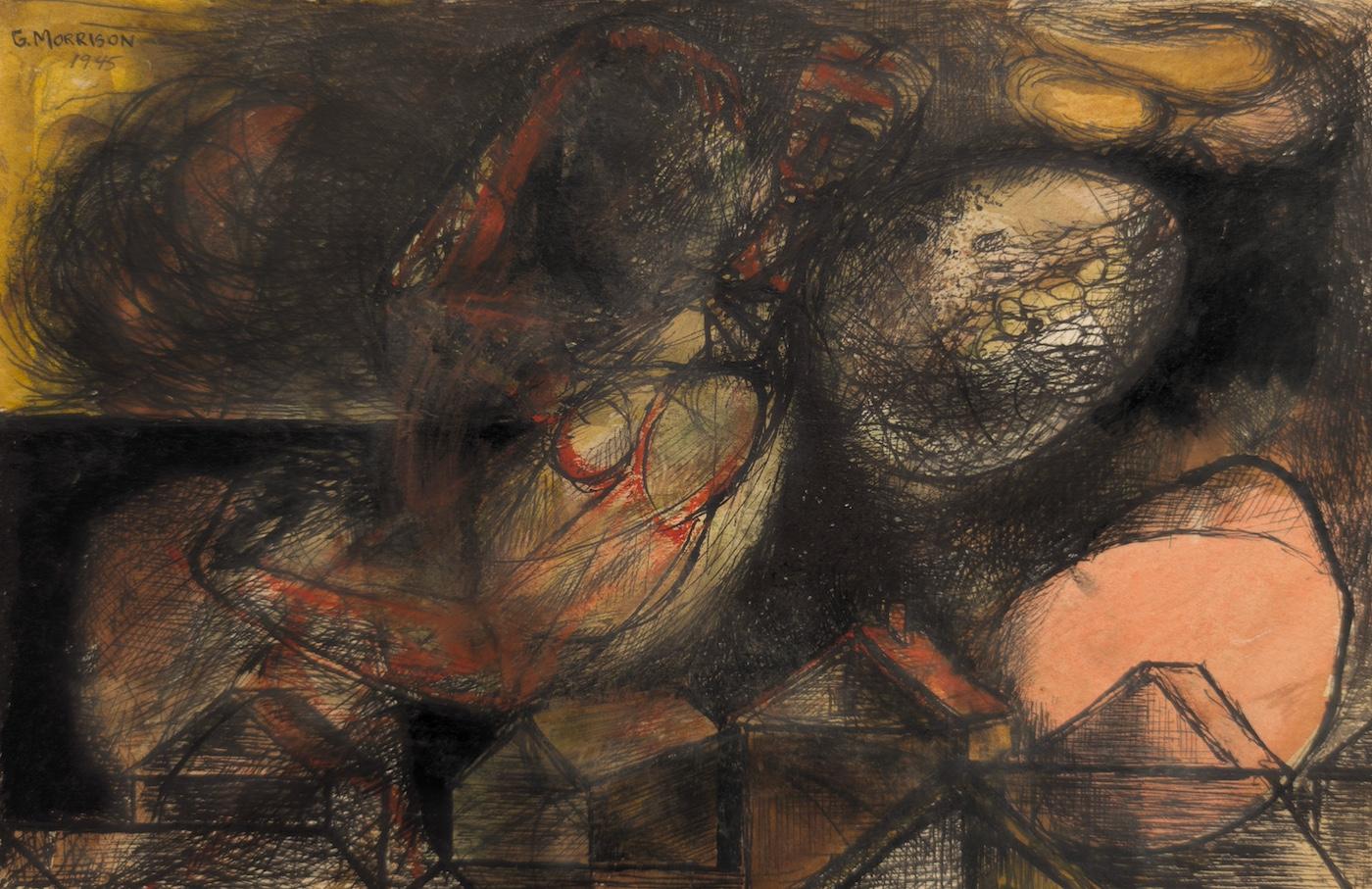
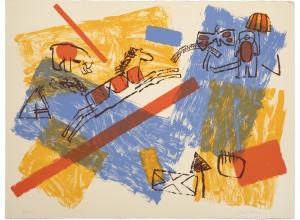
George Morrison, Native American, Grand Portage Chippewa, 1919–2000, Dream Of Calamity, 1945, Ink and watercolor on paper, 6 × 9 in. (15.2 × 22.9 cm)

Among the 35 works featured, this exhibition will debut two recently acquired by The Met: White Painting (1965), the first oil painting by Morrison to enter the Museum’s collection, and Construction in Fantasy (1953), a gouache and ink drawing that the artist created in France on the Côte d’Azur, acquired by The Met in 2023. The exhibition culminates in his Horizon Series, a logical extension of his interest in the point where land and sky meet. It also features rare archival material that places Morrison at the heart of the Abstract Expressionist movement.

Patricia Marroquin Norby (P’ urhépecha), Associate Curator of Native American Art in The Met’s American Wing, said, “This celebration of George Morrison’s work at The Met is long overdue. We are thrilled to honor the artist’s major contributions to the New York School with this exhibition and publication. Morrison strongly impacted the development of the American Abstract Expressionist movement as well as the work of his professional colleagues—artists who respected him as a leader and a voice for their generation. This exhibition offers an important opportunity to engage deeply with Morrison’s evolving practice, supported by rarely seen archival materials that reveal the depth and complexity of his artistic journey.”

40.779402418715, -73.9634031

The Magical City: George Morrison’s New York
Start Date:
July 17, 2025
End Date:
May 31, 2026
Venue:
The Met Fifth Avenue
About the Author

Cynthia Close

Cynthia Close holds a MFA from Boston University, was an instructor in drawing and painting, Dean of Admissions at The Art Institute of Boston, founder of ARTWORKS Consulting, and former executive director/president of Documentary Educational Resources, a film company. She was the inaugural art editor for the literary and art journal Mud Season Review. She now writes about art and culture for several publications.

Subscribe to our free e-letter!

Webform
Art and Object Marketplace - A Curated Art Marketplace